




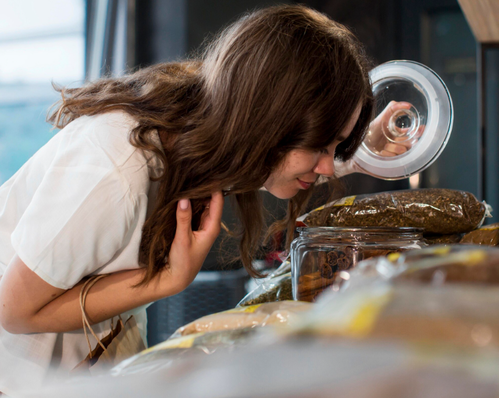
Not long ago, a candle was a practical object. It provided light when electricity was unavailable and, occasionally, a mild ambient scent as a secondary feature. Today, the global scented candle market is valued at several billion dollars and growing. People spend serious money on vessels of wax they will never fully consume, in fragrances engineered by perfumers with the same professional seriousness applied to fine cologne. Something has changed — not in the candle, but in what consumers expect from the objects that populate their daily lives. The sensory dimension of products, long treated as a finishing touch, has become central to the entire proposition.
When Scent Became a Product Category
The transformation of fragrance from functional attribute to primary selling point did not happen in isolation. It arrived alongside a broader shift in how consumer culture defines value. As physical goods became cheaper and more abundant, the experiential qualities of objects — how they smell, how they feel, the mood they produce — began to carry proportionally more weight in purchasing decisions.
The wellness industry accelerated this shift considerably. Aromatherapy, once associated with alternative medicine practitioners operating on the fringes of mainstream retail, entered department stores, airport terminals, and corporate office lobbies without apology. Diffusers that disperse essential oils became standard items in homes where a decade earlier they would have seemed eccentric. The logic driving adoption was straightforward: if environments can be made to smell better, and if smelling better produces measurable effects on mood and cognition — claims the research literature supports with moderate consistency — then scent management becomes a rational investment rather than an indulgence.
Taste as Experience: The Craft Food Revolution
The parallel development in taste followed a similar trajectory through different channels. The craft food movement — artisan chocolate, small-batch coffee, single-origin everything — reframed eating and drinking as sensory exploration rather than simple sustenance. Flavour complexity became a form of cultural capital. The person who could identify the specific region of Ethiopia responsible for their morning coffee, or describe the tasting notes of a fermented hot sauce, demonstrated a kind of educated palate that carried social weight in certain contexts.
This produced a market increasingly oriented toward surprise, specificity, and novelty. Mainstream food manufacturers responded by introducing flavour profiles that would have seemed implausible in earlier decades — salted caramel everywhere, botanical gins, matcha applied to products with no obvious connection to Japanese culinary tradition. The underlying dynamic was consistent: consumers had been trained, by craft food culture, to expect their taste experiences to be interesting. The bar for what counted as unremarkable had risen.
Sensory Expectations Beyond the Kitchen
This conditioning did not remain confined to food and home fragrance. The expectation of considered sensory design migrated into categories that had previously given almost no thought to taste or scent as product attributes. Personal care products began competing on fragrance complexity. Cleaning products were reformulated to smell less clinical and more like something a person might actively choose to encounter. Even pharmaceutical companies began addressing the flavour profiles of oral medications with more seriousness.
The trend reached segments that had never previously positioned themselves around flavour experience at all. Producers of https://doctorvape.eu/pl/3-liquidy for personal electronic devices now offer hundreds of distinct profiles — from straightforward tobacco and menthol to elaborately constructed tropical fruit combinations, dessert-inspired blends, and seasonal limited releases. The product development logic mirrors the craft beverage industry almost exactly: novelty, specificity, and the promise of a sensory experience worth seeking out. Whether one views this particular application as benign or concerning is a separate question; as a reflection of broader consumer conditioning, it is entirely consistent with the pattern.
The Limits of the Sensory Economy
There are reasons to examine this trend with some scepticism alongside genuine curiosity. The industrialisation of sensory experience carries its own contradictions.
“Fragrances engineered to evoke natural environments are produced through synthetic chemistry. Flavour profiles described as authentic are frequently the result of laboratory processes as removed from their source ingredients as any other form of food manufacturing” – mentions https://doctorvape.eu/epl.
The craft aesthetic — the rough-hewn label, the small-batch language — is itself a highly developed form of marketing, often applied to products produced at considerable scale.
There is also the question of sensory fatigue. When everything is designed to be an experience, the threshold for what registers as genuinely notable rises continuously. The flavour that seemed adventurous three years ago is now a baseline offering. The fragrance that once distinguished a space has been replicated across a thousand retail environments. The sensory economy, in pursuing engagement, may be quietly eroding the conditions that make genuine sensory experience meaningful — which suggests that the next shift in consumer expectation, whatever form it takes, may move in a considerably different direction.